ISBN: No Information
Category: Academic Publications, SERGI MAKALATIA . HISTORICAL-ETHNOGRAPHIC STUDIES
Pages: 328
Format: 13,5 x 20
Published: No Information
Cover: Hard
Price: 0.00 
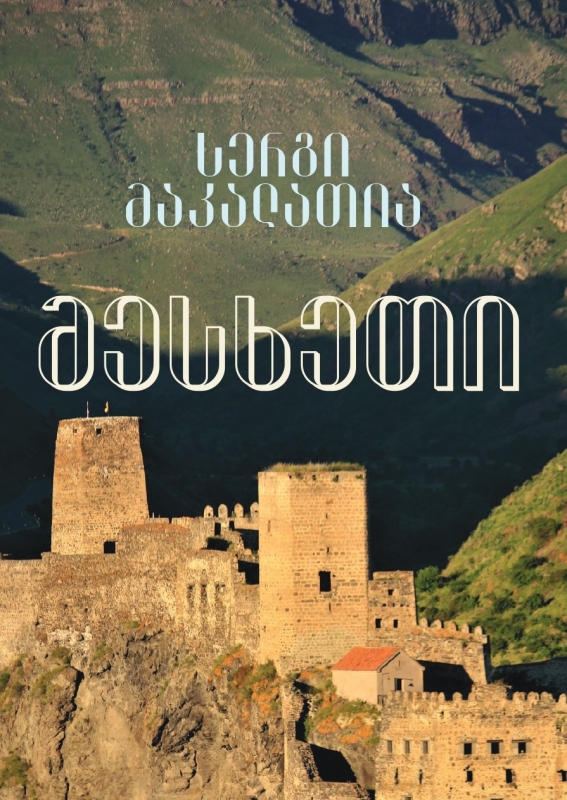
In 1938, Sergi Makalatia published a study titled “Meskheti-Javakheti.” This work is based on extensive material gathered during fieldwork conducted by Makalatia in the summer of 1937 in the Samtskhe-Javakheti region.
The choice of the title “Meshketi” for the present publication was made by the editorial board for specific reasons. Meshketi, also called "Zemo Kartli" (Upper Kartli), is a collective historical and geographical term that covers all of historic southwestern Georgia. In addition to Samtskhe and Javakheti, it includes numerous other provinces such as Speri, Tao, Klarjeti, Shavsheti, Adjara, Chrdili, Kola, Artaani, and Erusheti. Makalatia’s work consists of two major sections: one section is an overview of the political history of the region and another provides an ethnographic description. The first section is a summary of the history of Meshketi, including its provinces, while the second offers a more comprehensive ethnographic study. Because it was not possible to study the provinces situated in Turkey at that time, the ethnographic account is limited exclusively to Samtskhe-Javakheti. Therefore, “Meshketi” was chosen as the overarching name to represent the entire historic region.
Additionally, the term "Meshketi-Javakheti" itself is somewhat inaccurate. As a result of the Russian-Ottoman War of 1828-1829, the Georgian provinces of Samtskhe and Javakheti, which had been under Ottoman rule since the 16th century, came under Russian control. Over time, instead of "Samtskhe-Javakheti," the more common term Meshketi-Javakheti gradually gained acceptance. The word “Meshketi” retained a narrower meaning, referring specifically to Samtskhe; however, it is still used in its broader historical context. Since the 19th century, "Meshketi-Javakheti" has primarily appeared in popular literature and only sparingly in scholarly works. Remarkably, Makalatia himself used this term. In addition to the title, the term appears frequently throughout the text, but inconsistently: sometimes referring to the entire Meshketi (Upper Kartli), and other times specifically to its two provinces – Samtskhe and Javakheti.